

Tizi Ouzou Living Lab
| Area | Leader | Farming system |
|---|---|---|
| AreaTizi Ouzou, Algeria | LeaderCREAD | Farming systemMountainous system |
| Main productions and value chains | Main issues | |
| Main productions and value chainsOlive oil, milk | Main issues Environmental Climate change. Economic Market. |
|
General information
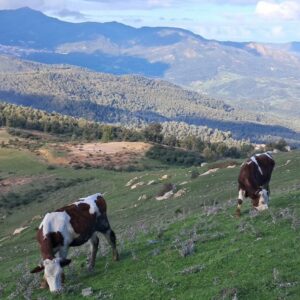
The Living Lab of Tizi-Ouzou comprises of the communes of Yakouren and Azazga. They are located around 150 km east of Algiers and 10 km inland from the coast in an area characterized by forests and mountains. Most of the area is located in the forest massif of Ath Ghovri. It has a hot Mediterranean climate with mean daily temperatures well above 30 degrees Celsius during the Summer months, although the temperature is somewhat cooler in the mountainous areas. Agricultural production is one of the main economic activities in the region, especially livestock and dairy production.
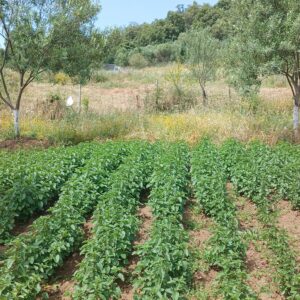
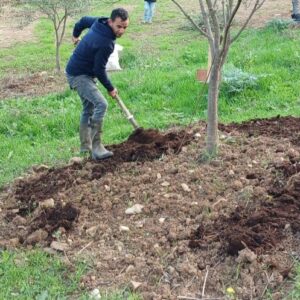
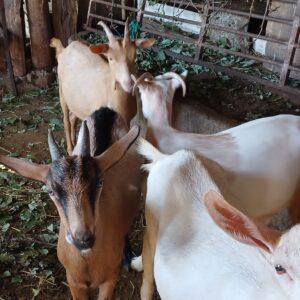
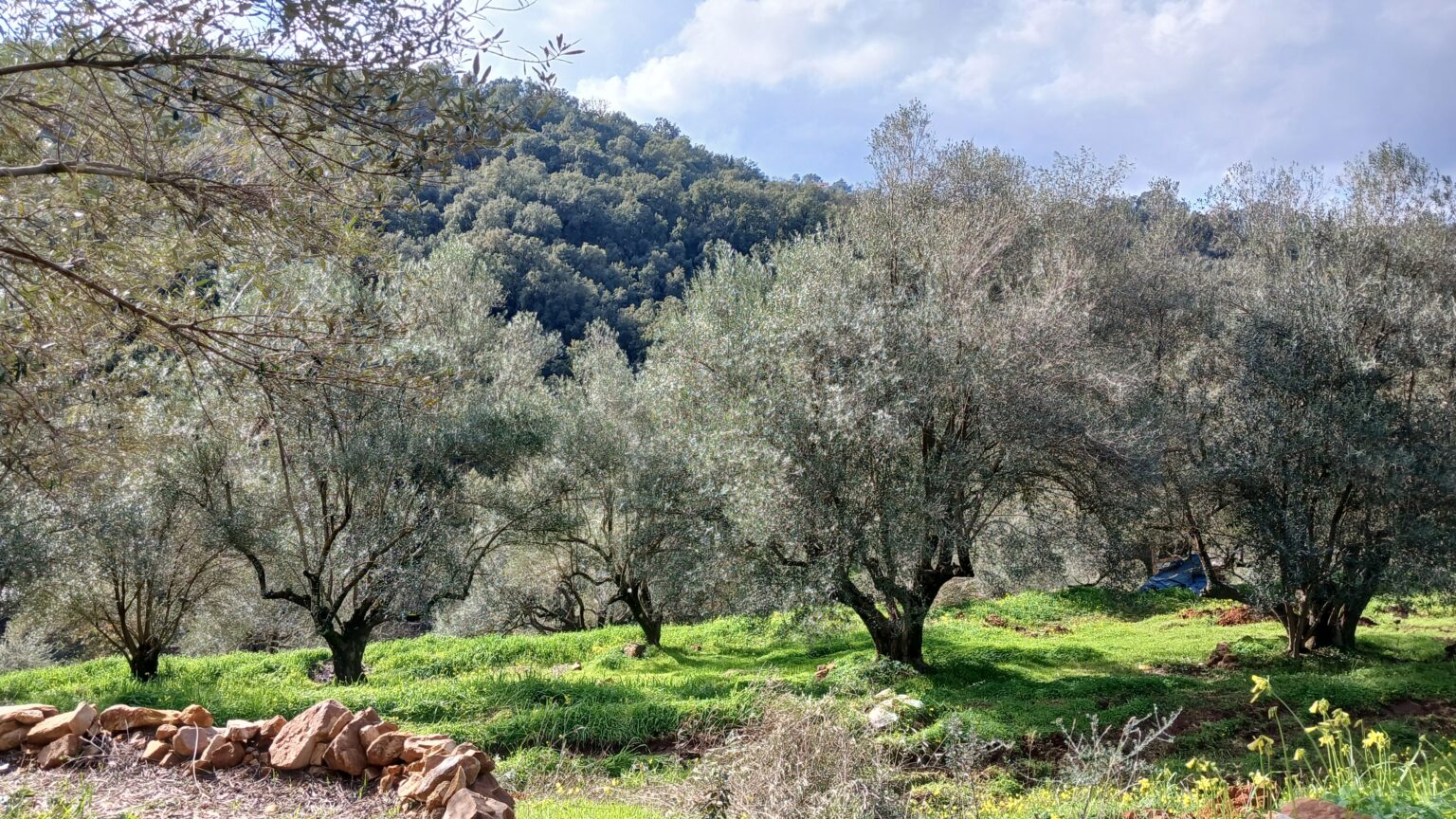
The region’s farmers tend to have mixed farming systems with olive trees often being cultivated with understory crops such as cereals or legumes. They also rear sheep and goats which graze in forested areas. But dairy cattle are the most important livestock for milk production. Women are involved in agricultural activities and some crops are grown almost exclusively by them (eg, vegetables and medicinal and aromatic plants). According to the Chamber of Agriculture of the Wilaya of Tizi-Ouzou, around one third of the farmers in the area of the LL are women.
Farmers in the LL benefit from programmes to develop agriculture and support producers in mountain areas. Cattle farmers are entitled to subsidies for the purchase of maize silage and premiums on the price of milk, while cereal farmers are supplied with subsidised seeds and chemical fertilisers by the cereal cooperatives (CCLS).
Farmers are faced with critical challenges in terms of access to water and increasingly erratic precipitation patterns. Urbanization and unplanned construction are decreasing access to agricultural land. This is being further complicated by deterioration of rural road infrastructure.
Representative Farms
The Living Lab of Tizi Ouzou is characterized by a highly diverse agricultural landscape, comprising five main farm types: Dairy, Goat, Cereal, Diversified, and Aromatic and Medicinal Plant (AMP) farms. This diversity reflects the range of production activities and livelihood strategies present in the region. AMP farms are mainly managed by women and are characterized by small production areas dedicated to aromatic and medicinal crops. AMP farms were not included in the quantitative modeling exercise. Their small land area and specific production activities were difficult to represent within the structure of the bioeconomic model. As a result, it was not possible to simulate their production system in a consistent way alongside the other farm types, and the analysis therefore focused on the remaining four farm types.
Dairy Farms
- 3.03 ha
- Dairy cattle · milk
- Fodder · market gardening · trees
- Irrigation
- National support measures
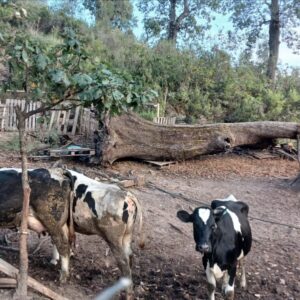
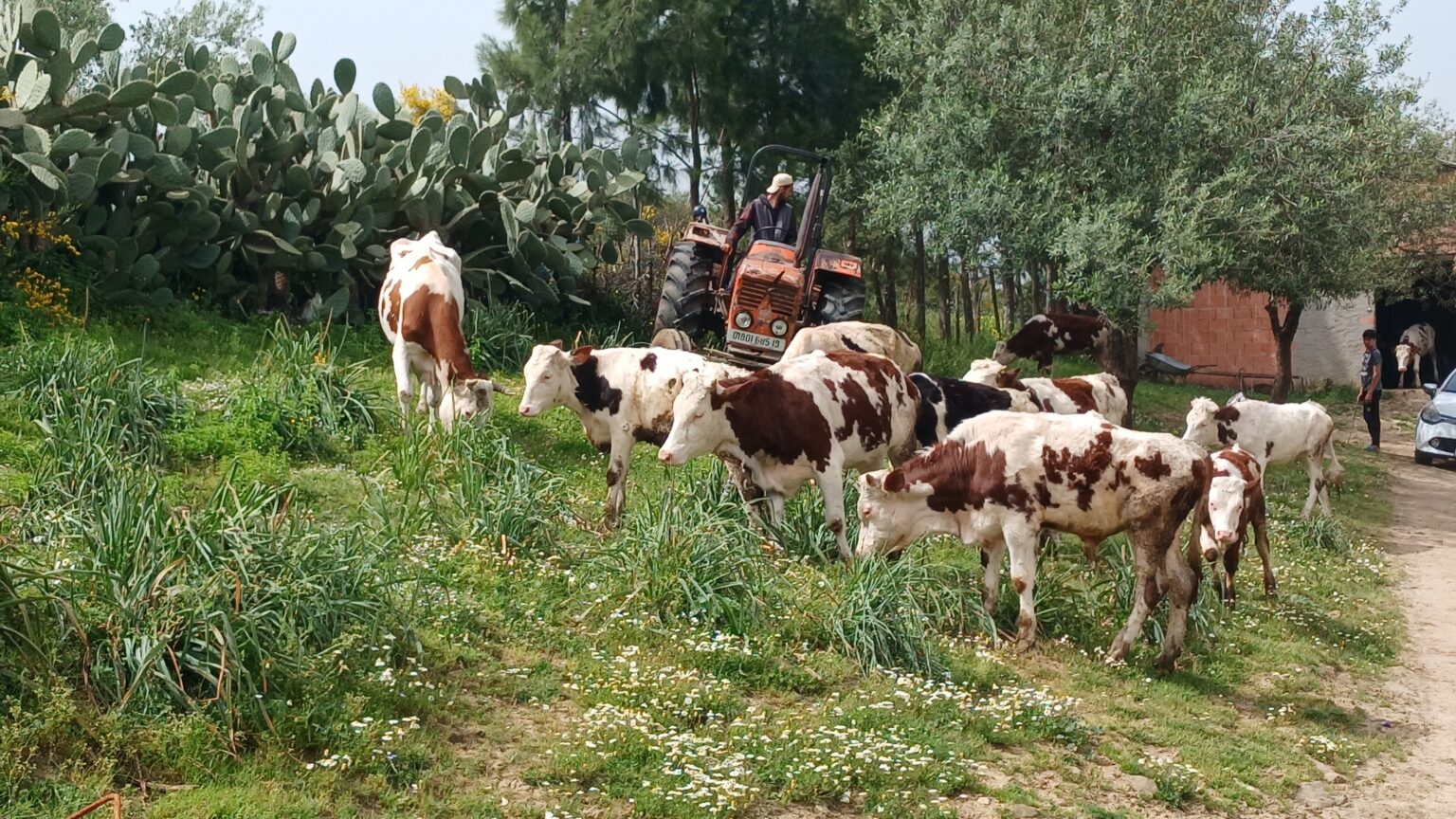
This farm type combines crop and livestock production, with most cropping activities oriented toward supporting animal feeding. Alongside fodder production, farmers maintain a diversity of crops, including market gardening and perennial trees, contributing to both household consumption and income. Agriculture represents the main livelihood activity for most households, and irrigation is an important component of the production system. Milk is the main marketed product, and these farms are among the primary beneficiaries of national support measures, including incentives targeting livestock production as well as subsidies for crop and fodder production.
Goat Farms
- 3.55 ha
- Goats · forest rangelands
- Fodder · vegetables · trees
- Small households
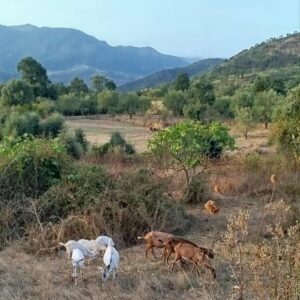
This farm type is centered on goat production, with most cropping activities oriented toward supporting animal feeding. Alongside fodder production, farmers maintain a limited diversity of vegetable crops and trees, contributing to household consumption and income generation. Households are generally small; agriculture represents the main livelihood activity for most families. The functioning of these farms relies on a combination of on-farm fodder production and access to surrounding forest rangelands, which provide an important source of feed for grazing animals throughout the year.
Cereal Farms
- 4.94 ha
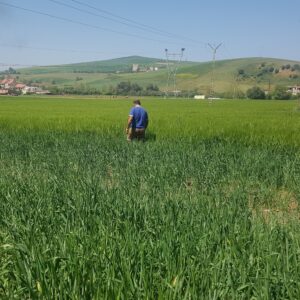
- Cereals · legumes · trees
- Off-farm employment
- Cereal cooperatives
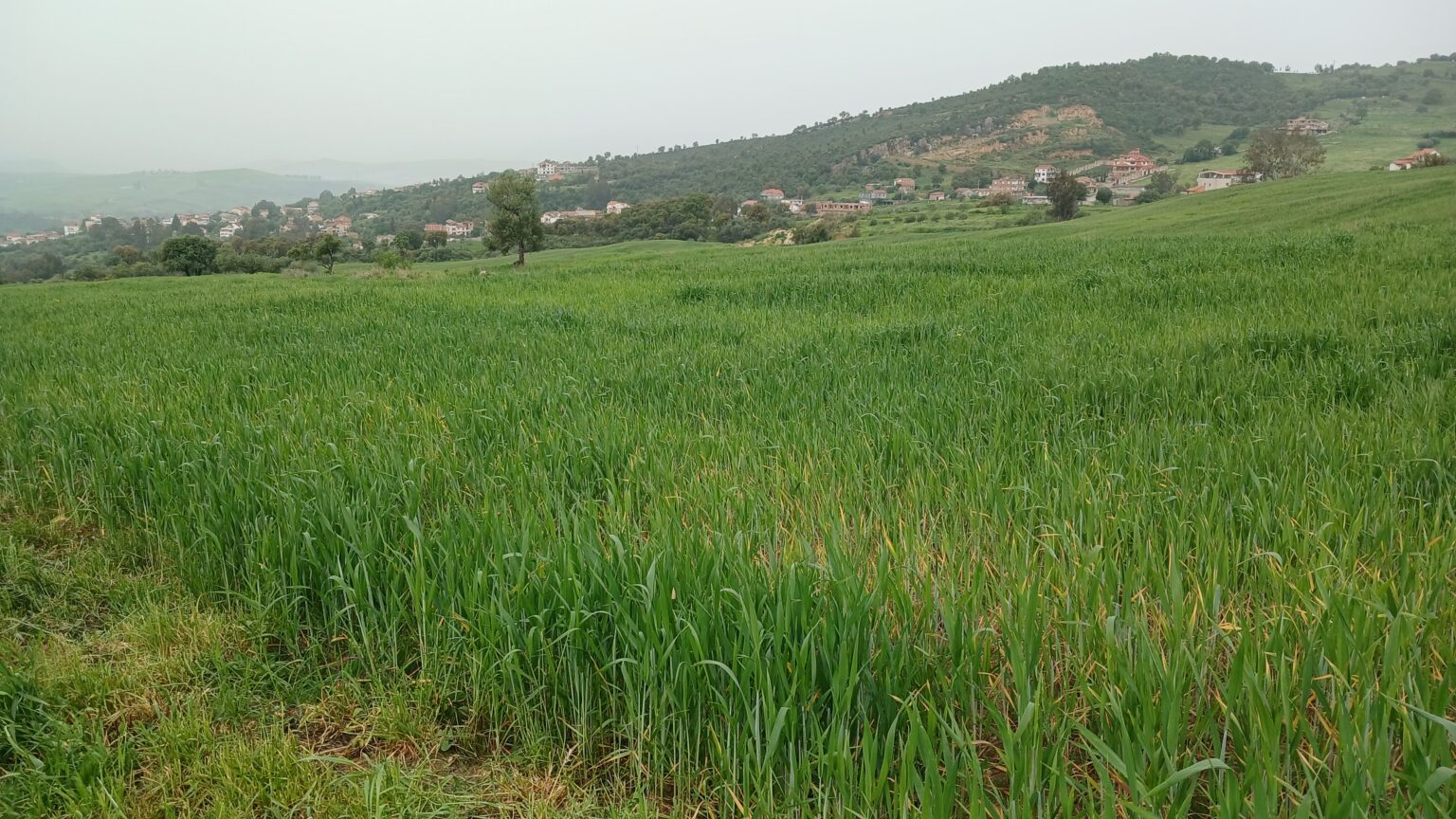
Alongside cereal production, farmers maintain a limited diversity of legumes, perennial trees, and market gardening activities, contributing to both household consumption and income generation. Livestock plays only a minor role within the farming system. Households are relatively young compared to the other farm types, and off-farm employment constitutes an important component of household livelihoods. Cereal production also connects these farms to agricultural support measures and grain marketing channels through the cereal cooperatives.
Diversified Farms
- 1.83 ha
- Trees · vegetables · fodder · cereals
- Minor livestock
- Highest education level
Farmers maintain a diverse mix of tree crops, market gardening, fodder crops, cereals, and other food crops, contributing to both household consumption and household income. Livestock plays only a minor role within the farming system. Agriculture represents the main livelihood activity for most households, whose heads have the highest education levels across the farm profiles. The diversity of production activities reduces dependence on any single crop or source of income.
The database will be available soon.
Simulation of agroecological practices and their combinations
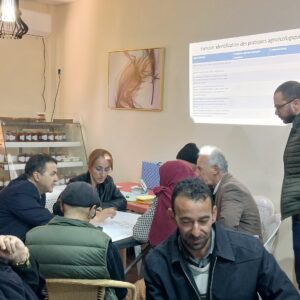
The agroecological transition scenarios were co-designed together with the living labs through workshops that anchored the discussion in the challenges present in their territory. Consequently, they decided which agroecological practices, and which combinations of them, to promote the change in their farming systems. The AEP selection and scenario design comprised two different workshops focusing on the selection of agroecological practices aligned with the local context. First, a farmers’ workshop was conducted to design and select the agroecological practices they were willing to implement in the living lab, grounding the discussion on existing challenges. Subsequently, a representative board’s workshop was conducted, where representative board members examined the selected agroecological practices chosen by farmers, assessed their combinations, and identified additional practices.
| Name |
Local seeds |
|---|---|
| Summary |
This AEP replaces purchased commercial seed with locally produced and farmer-saved seed of local varieties for tomato. The cropping pattern, the irrigated area and the livestock herd are held at their baseline levels; what changes is the origin of the seed and, with it, the input requirement and the cost structure of the affected crops. The practice targets the dependency of farms on external input supply and the exposure of tomatoes production to increasingly erratic precipitation, by mobilising varieties selected under local conditions. |
| Full description |
This AEP introduces the use of local tomato seedlings, purchased at 20 DZD per plant and producing tomatoes sold at approximately 110 DZD per kg on local markets. The higher market value of local tomatoes makes them an economically attractive alternative to hybrid varieties. This AEP is associated with higher labour requirements and increased production costs. At the same time, pesticide use is substantially reduced, reflecting the greater adaptation and resilience of local varieties to local climatic conditions, pests, and diseases. |
Indicators
Agronomic
| Dairy farms | Goat farms | Cereal farms | Diversified farms | |||||
|---|---|---|---|---|---|---|---|---|
| Scenario | Baseline | Local seeds | Baseline | Local seeds | Baseline | Local seeds | Baseline | Local seeds |
| Farm Size (ha) | Dairy farms — Baseline3.03 | Dairy farms — Local seeds2.63 | Goat farms — Baseline3.55 | Goat farms — Local seeds2.21 | Cereal farms — Baseline4.94 | Cereal farms — Local seeds6.03 | Diversified farms — Baseline1.83 | Diversified farms — Local seeds1.83 |
| Crop Diversity (# of crops) | Dairy farms — Baseline8 | Dairy farms — Local seeds5 | Goat farms — Baseline9 | Goat farms — Local seeds4 | Cereal farms — Baseline9 | Cereal farms — Local seeds7 | Diversified farms — Baseline6 | Diversified farms — Local seeds4 |
| Land Use | Dairy farms — BaselineBarley (1.35 ha), Durum wheat (0.10 ha), Faba bean (0.001 ha), Chickpea (0.06 ha), Clover (0.67 ha), Petit pois (0.03 ha), Dolique (0.008 ha), Tomato (0.54 ha), Olive (0.27 ha), Livestock: Yes |
Dairy farms — Local seedsBarley (0.14 ha), Sorghum (0.07 ha), Forage (0.10 ha), Chickpea (0.001 ha), Turnip (2.05 ha), Olive (0.27 ha), Livestock: Yes |
Goat farms — BaselineBarley (2.05 ha), Oat (0.005 ha), Soft wheat (0.51 ha), Faba bean (0.35 ha), Chickpea (0.14 ha), Petit pois (0.30 ha), Tomato (0.12 ha), Potato (0.009 ha), Olive (0.07 ha), Livestock: Yes |
Goat farms — Local seedsForage (0.06 ha), Clover (0.32 ha), Carrot (1.07 ha), Turnip (0.69 ha), Olive (0.07 ha), Livestock: Yes |
Cereal farms — BaselineBarley (0.26 ha), Durum wheat (3.81 ha), Soft wheat (0.51 ha), Faba bean (0.03 ha), Chickpea (0.14 ha), Tomato (0.12 ha), Potato (0.010 ha), Onion (0.002 ha), Olive (0.06 ha), Livestock: Yes |
Cereal farms — Local seedsBarley (0.11 ha), Durum wheat (0.91 ha), Sorghum (0.31 ha), Forage (0.05 ha), Clover (0.02 ha), Turnip (4.57 ha), Olive (0.06 ha), Livestock: Yes |
Diversified farms — BaselineBarley (0.92 ha), Oat (0.17 ha), Sorghum (0.08 ha), Chickpea (0.02 ha), Tomato (0.13 ha), Potato (0.04 ha), Olive (0.47 ha), Livestock: Yes |
Diversified farms — Local seedsBarley (0.19 ha), Chickpea (0.02 ha), Clover (0.01 ha), Local tomato (1.15 ha), Olive (0.47 ha), Livestock: Yes |
| Pesticide Use (kg/year/farm) | Dairy farms — Baseline101.6 | Dairy farms — Local seeds46.0 | Goat farms — Baseline78.1 | Goat farms — Local seeds4.1 | Cereal farms — Baseline15.8 | Cereal farms — Local seeds35.2 | Diversified farms — Baseline101.0 | Diversified farms — Local seeds15.0 |
| Fertilizer Use (kg/year/farm) | Dairy farms — Baseline63.6 | Dairy farms — Local seeds123.0 | Goat farms — Baseline762.5 | Goat farms — Local seeds96.1 | Cereal farms — Baseline156.2 | Cereal farms — Local seeds240.7 | Diversified farms — Baseline146.3 | Diversified farms — Local seeds77.0 |
| Nitrogen Leaching (kg/year/farm) | Dairy farms — Baseline35.1 | Dairy farms — Local seeds24.7 | Goat farms — Baseline19.9 | Goat farms — Local seeds19.2 | Cereal farms — Baseline152.5 | Cereal farms — Local seeds39.8 | Diversified farms — Baseline39.8 | Diversified farms — Local seeds15.4 |
Socio-economic
| Dairy farms | Goat farms | Cereal farms | Diversified farms | |||||
|---|---|---|---|---|---|---|---|---|
| Scenario | Baseline | Local seeds | Baseline | Local seeds | Baseline | Local seeds | Baseline | Local seeds |
| Total Farm Income ($/year/farm) | Dairy farms — Baseline22,945 | Dairy farms — Local seeds40,915 | Goat farms — Baseline6,087 | Goat farms — Local seeds21,739 | Cereal farms — Baseline9,636 | Cereal farms — Local seeds49,955 | Diversified farms — Baseline8,016 | Diversified farms — Local seeds16,424 |
| Cost ($/year/farm) | Dairy farms — Baseline8,184 | Dairy farms — Local seeds15,751 | Goat farms — Baseline3,478 | Goat farms — Local seeds10,199 | Cereal farms — Baseline9,439 | Cereal farms — Local seeds31,099 | Diversified farms — Baseline1,066 | Diversified farms — Local seeds11,961 |
| Labour (person-days/year/farm) | Dairy farms — Baseline76 | Dairy farms — Local seeds160 | Goat farms — Baseline30 | Goat farms — Local seeds82 | Cereal farms — Baseline23 | Cereal farms — Local seeds145 | Diversified farms — Baseline101.5 | Diversified farms — Local seeds202 |
| Name |
Intercropping of faba beans |
|---|---|
| Summary |
This AEP introduces faba bean legume crop within existing olive orchards, allowing agricultural production to take place at different levels on the same parcel. While intercropping in olive orchards is already practiced by some farmers in the Living Lab, it is tested among different farm types in the simulations. Olive trees are maintained without modification, and the additional crop increases the use of available land without replacing existing production activities. |
| Full description |
This AEP introduces intercropping within existing olive orchards by growing faba bean crops between olive tree rows. Rather than replacing existing activities, the practice adds a second layer of production on land already dedicated to olive cultivation, increasing the use of available space. Olive trees are maintained without modification, while the intercrop provides an additional source of forage and income. By combining tree and crop production on the same parcel, this practice aims to improve land productivity while diversifying agricultural outputs. |
Indicators
Agronomic
| Dairy farms | Goat farms | Cereal farms | Diversified farms | |||||
|---|---|---|---|---|---|---|---|---|
| Scenario | Baseline | Intercropping of faba beans | Baseline | Intercropping of faba beans | Baseline | Intercropping of faba beans | Baseline | Intercropping of faba beans |
| Farm Size (ha) | Dairy farms — Baseline3.03 | Dairy farms — Intercropping of faba beans3.13 | Goat farms — Baseline3.55 | Goat farms — Intercropping of faba beans2.11 | Cereal farms — Baseline4.94 | Cereal farms — Intercropping of faba beans4.92 | Diversified farms — Baseline1.83 | Diversified farms — Intercropping of faba beans1.95 |
| Crop Diversity (# of crops) | Dairy farms — Baseline8 | Dairy farms — Intercropping of faba beans14 | Goat farms — Baseline9 | Goat farms — Intercropping of faba beans10 | Cereal farms — Baseline9 | Cereal farms — Intercropping of faba beans13 | Diversified farms — Baseline6 | Diversified farms — Intercropping of faba beans7 |
| Land Use | Dairy farms — BaselineBarley (1.35 ha), Durum wheat (0.10 ha), Faba bean (0.001 ha), Chickpea (0.06 ha), Clover (0.67 ha), Petit pois (0.03 ha), Dolique (0.008 ha), Tomato (0.54 ha), Olive (0.27 ha), Livestock: Yes |
Dairy farms — Intercropping of faba beansBarley (1.30 ha), Oat (0.05 ha), Durum wheat (0.09 ha), Sorghum (0.02 ha), Forage (0.02 ha), Faba bean (0.001 ha), Chickpea (0.05 ha), Clover (0.65 ha), Petit pois (0.03 ha), Dolique (0.008 ha), Carrot (0.54 ha), Potato (0.001 ha), Local tomato (0.09 ha), Olive (0.27 ha), Livestock: Yes |
Goat farms — BaselineBarley (2.05 ha), Oat (0.005 ha), Soft wheat (0.51 ha), Faba bean (0.35 ha), Chickpea (0.14 ha), Petit pois (0.30 ha), Tomato (0.12 ha), Potato (0.009 ha), Olive (0.07 ha), Livestock: Yes |
Goat farms — Intercropping of faba beansBarley (0.005 ha), Oat (0.007 ha), Soft wheat (0.01 ha), Forage (0.05 ha), Faba bean (0.33 ha), Clover (0.07 ha), Petit pois (0.01 ha), Carrot (0.41 ha), Tomato (0.05 ha), Local tomato (1.08 ha), Olive (0.07 ha), Livestock: Yes |
Cereal farms — BaselineBarley (0.26 ha), Durum wheat (3.81 ha), Soft wheat (0.51 ha), Faba bean (0.03 ha), Chickpea (0.14 ha), Tomato (0.12 ha), Potato (0.010 ha), Onion (0.002 ha), Olive (0.06 ha), Livestock: Yes |
Cereal farms — Intercropping of faba beansBarley (0.13 ha), Oat (0.002 ha), Durum wheat (3.76 ha), Sorghum (0.04 ha), Soft wheat (0.58 ha), Faba bean (0.03 ha), Chickpea (0.14 ha), Clover (0.005 ha), Petit pois (0.03 ha), Carrot (0.13 ha), Tomato (0.010 ha), Potato (0.002 ha), Local tomato (0.01 ha), Olive (0.06 ha), Livestock: Yes |
Diversified farms — BaselineBarley (0.92 ha), Oat (0.17 ha), Sorghum (0.08 ha), Chickpea (0.02 ha), Tomato (0.13 ha), Potato (0.04 ha), Olive (0.47 ha), Livestock: Yes |
Diversified farms — Intercropping of faba beansBarley (0.92 ha), Oat (0.17 ha), Sorghum (0.08 ha), Faba bean (0.12 ha), Chickpea (0.02 ha), Tomato (0.13 ha), Potato (0.04 ha), Olive (0.47 ha), Livestock: Yes |
| Pesticide Use (kg/year/farm) | Dairy farms — Baseline101.6 | Dairy farms — Intercropping of faba beans307.9 | Goat farms — Baseline78.1 | Goat farms — Intercropping of faba beans109.4 | Cereal farms — Baseline15.8 | Cereal farms — Intercropping of faba beans78.1 | Diversified farms — Baseline101.0 | Diversified farms — Intercropping of faba beans101.0 |
| Fertilizer Use (kg/year/farm) | Dairy farms — Baseline63.6 | Dairy farms — Intercropping of faba beans175.2 | Goat farms — Baseline762.5 | Goat farms — Intercropping of faba beans100.6 | Cereal farms — Baseline156.2 | Cereal farms — Intercropping of faba beans762.2 | Diversified farms — Baseline146.3 | Diversified farms — Intercropping of faba beans199.0 |
| Nitrogen Leaching (kg/year/farm) | Dairy farms — Baseline35.1 | Dairy farms — Intercropping of faba beans35.0 | Goat farms — Baseline19.9 | Goat farms — Intercropping of faba beans19.9 | Cereal farms — Baseline152.5 | Cereal farms — Intercropping of faba beans152.5 | Diversified farms — Baseline39.8 | Diversified farms — Intercropping of faba beans39.8 |
Socio-economic
| Dairy farms | Goat farms | Cereal farms | Diversified farms | |||||
|---|---|---|---|---|---|---|---|---|
| Scenario | Baseline | Intercropping of faba beans | Baseline | Intercropping of faba beans | Baseline | Intercropping of faba beans | Baseline | Intercropping of faba beans |
| Total Farm Income ($/year/farm) | Dairy farms — Baseline22,945 | Dairy farms — Intercropping of faba beans22,931 | Goat farms — Baseline6,087 | Goat farms — Intercropping of faba beans6,084 | Cereal farms — Baseline9,636 | Cereal farms — Intercropping of faba beans9,629 | Diversified farms — Baseline8,016 | Diversified farms — Intercropping of faba beans8,033 |
| Cost ($/year/farm) | Dairy farms — Baseline8,184 | Dairy farms — Intercropping of faba beans8,273 | Goat farms — Baseline3,478 | Goat farms — Intercropping of faba beans3,498 | Cereal farms — Baseline9,439 | Cereal farms — Intercropping of faba beans10,262 | Diversified farms — Baseline1,066 | Diversified farms — Intercropping of faba beans8,062 |
| Labour (person-days/year/farm) | Dairy farms — Baseline76 | Dairy farms — Intercropping of faba beans152 | Goat farms — Baseline30 | Goat farms — Intercropping of faba beans33 | Cereal farms — Baseline23 | Cereal farms — Intercropping of faba beans44 | Diversified farms — Baseline101.5 | Diversified farms — Intercropping of faba beans112.6 |
Agroecological zones
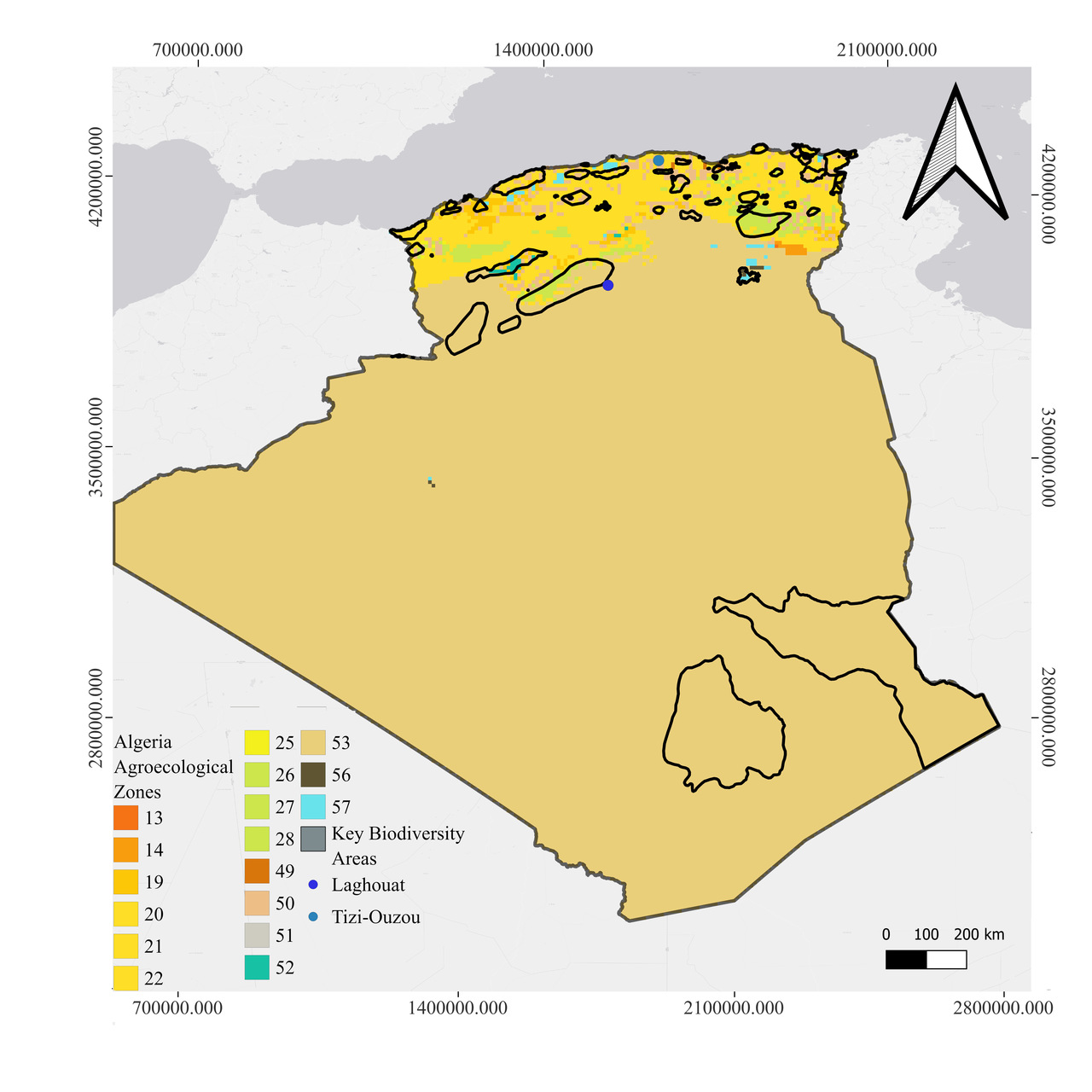
Agroecological zones (GAEZ v4) and Key Biodiversity Areas of Algeria
Legend
| AEZ | Temperature regime | Moisture | Soil/terrain limitations |
|---|---|---|---|
| 1 | Lowland | Semi-arid | Minor limitations |
| 2 | Lowland | Semi-arid | Significant limitations |
| 13 | Warm | Semi-arid | Minor limitations |
| 14 | Warm | Semi-arid | Significant limitations |
| 16 | Warm | Sub-humid | Significant limitations |
| 19 | Moderately cool | Semi-arid | Minor limitations |
| 20 | Moderately cool | Semi-arid | Significant limitations |
| 21 | Moderately cool | Sub-humid | Minor limitations |
| 22 | Moderately cool | Sub-humid | Significant limitations |
| 25 | Cool | Semi-arid | Minor limitations |
| 26 | Cool | Semi-arid | Significant limitations |
| 27 | Cool | Sub-humid | Minor limitations |
| 28 | Cool | Sub-humid | Significant limitations |
| 49 | Very steep terrain | ||
| 50 | Severe soil/terrain limitations | ||
| 51 | Land with ample irrigated soils | ||
| 52 | Dominantly hydromorphic soils | ||
| 53 | Desert/Arid climate | ||
| 56 | Dominantly urban/built up land | ||
| 57 | Dominantly water | ||
- Key Biodiversity Areas
- Laghouat Living Lab
- Tizi-Ouzou Living Lab
Agro-ecological zoning takes into consideration three parameters: the temperature regime, the available moisture in the environment and the restrictions imposed by the soil and/or topography. The temperature regime is a classification based on the prevailing temperatures, with some consideration on the average rainfall, and the temperature growing days (when daily temperatures are conducive to crop growth). Moisture classification is based on the availability of moisture for crop growth and is derived by the number of days where this growth is possible, considering both favourable temperatures and water availability. Soil/terrain restrictions are based on terrain steepness, as well as soil type.
The AEZ classification looks at those parameters without considering specific crops. Therefore, areas belonging to similar agroecological zones are expected to be equally suitable for any specific crop. As a result, any agro-ecological practices that are applied in a particular zone, should be able to be transferred in another area belonging to the same zone classification, using the same crop configuration.
Algeria’s climatic conditions are conducive for several crops under both regimes, whether rainfed or irrigated, particularly in the coastal Mediterranean area. The Laghouat living lab is on the verge of this zone, bordering the desert and relies on groundwater irrigation. The Tizi-Ouzou living lab is found near the Mediterranean coast and can support rainfed irrigation, however rainfall has been erratic in recent years. Its AEZ is subtropical.
Further results
In Tizi Ouzou, participants collaboratively assessed the results associated with local seed use and intercropping practices.
Local seeds
The findings related to local seeds were generally considered plausible and consistent with local experience, particularly the projected reduction in pesticide use. However, the participants highlighted that in the modelling results, most of the farm area was allocated to local tomato production through the optimization, which is not realistic in real life. These modeling results stem from the fact that the areas allocated to annual crops in the model can be freely adjusted.
Farmers explain their objections with two main reasons. First, they highlighted that they need to allocate their land to different crops for self-consumption and to diversify their income (for example, guaranteed income from cereal crops under government agreements). Moreover, they mentioned that it would not be possible to find a market for selling such a large amount of tomatoes, since the targeted market is the local market in the region, which already offers a high diversity of vegetables.
Intercropping of faba beans
In contrast, participants were more cautious about the intercropping results. Although they recognized potential benefits such as improved soil health and greater crop diversification, they considered the associated increase in production costs to be a major constraint. Higher labor requirements, the need for specific machinery, and additional input costs raised concerns about whether the projected outcomes would be economically viable and realistically achievable under current farming and market conditions.
Key message
This implies that future models must take into account both self-consumption constraints (also linked to socio-cultural factors) and market feedback in price adjustments.