

Riyad Living Lab – Nouakchott, Mauritania
| Area | Leader | Farming system |
|---|---|---|
| AreaSouth of Nouakchott, Mauritania | LeaderGRDR | Farming systemPeri-urban |
| Main productions and value chains | Main issues | |
| Main productions and value chainsProduction of vegetables and small livestock for the urban market. | Main issues Environmental Access to water, soil fertility, attacks by diseases and pests. Economic Marketing of agroecological products. |
|
General information
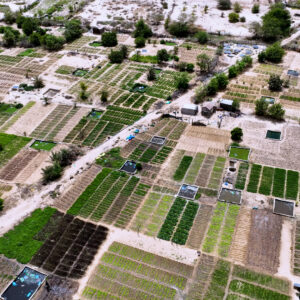
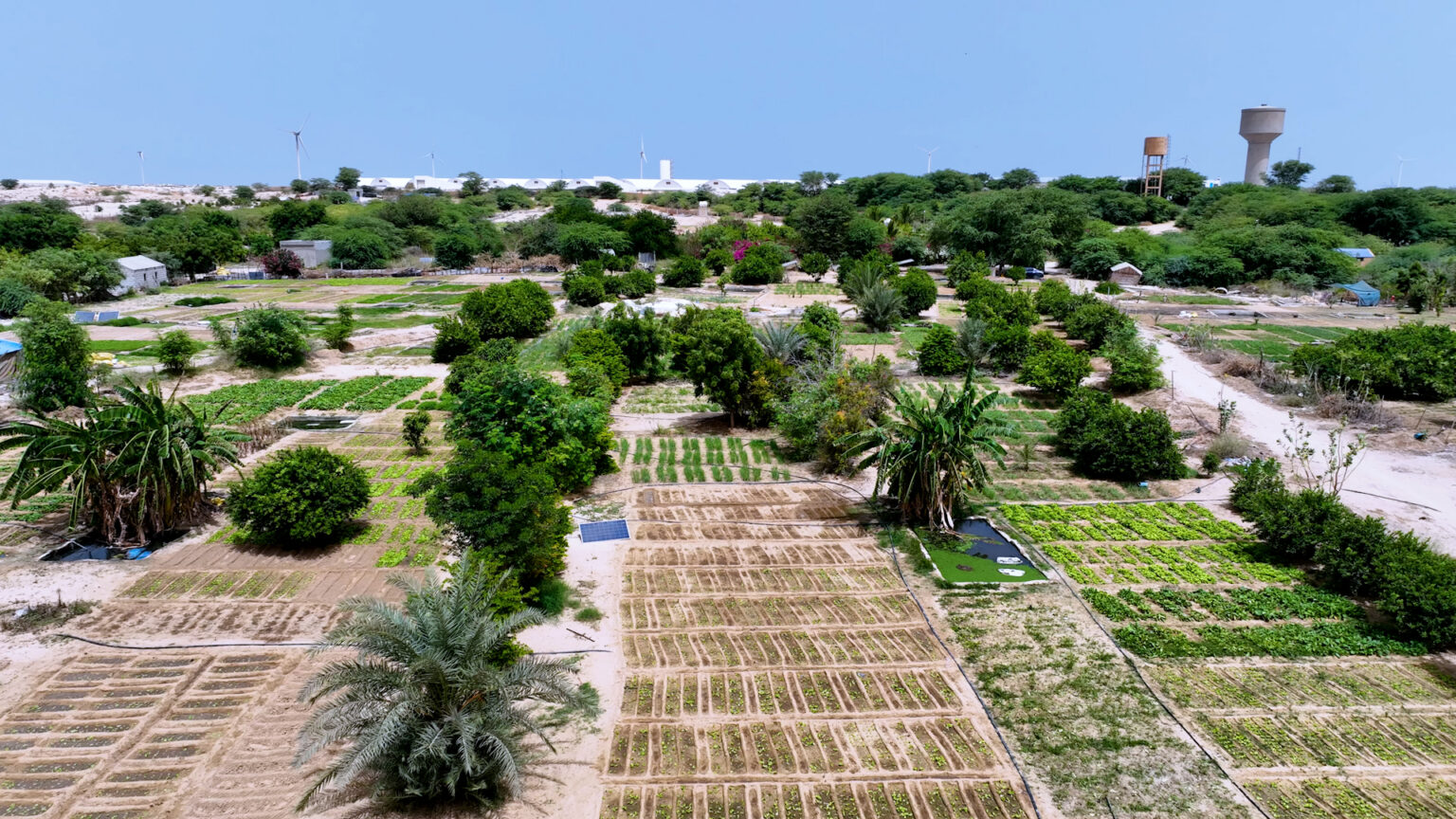
Established in 2016 as a government initiative to relocate market gardeners, PK-17 is a semi-arid peri-urban agricultural area in Riyadh commune, Nouakchott. Annual rainfall is reported as approximately 36 mm. Treated water is accessible through connections or pumping near the SNDE treatment plant, but availability is irregular. The NATAE study assesses farm typologies and ex-ante agroecological scenarios (crop diversification and composting) using farm surveys, expert consultations and participatory work. Scenario outcomes are modelled comparisons, not measured field impacts.
Representative Farms
Supported farms
- < 1 ha
- Cooperative members
- Secure land · subsidies
- Manual + drip irrigation · 4 m³ storage
- Family labour
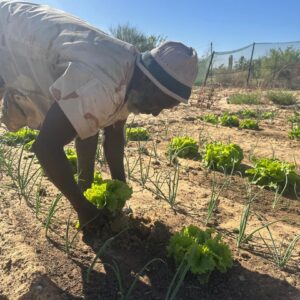
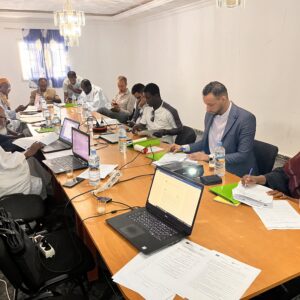
Supported farmers include military retirees and regional project beneficiaries who benefit from more secure access to land, cooperative membership, subsidies, and institutional support. This assistance includes the provision of agricultural inputs, such as seeds and pesticides, and, in some cases, access to drip irrigation systems. These farms rely primarily on family labour for their agricultural activities. Their main cash crops are turnips and onions, although some farmers also cultivate leafy vegetables, particularly during the rainy season.
Under the baseline scenario, turnip yields reach 7 t/ha, while onion yields average 6.5 t/ha. Farm income is estimated at 14,608.13 MRU, with annual irrigation water consumption of approximately 33,231 m³/ha. Despite institutional support, these farms face challenges related to soil fertility, water availability, and agricultural productivity.
Farms in PK-17 are generally smaller than 1 ha. The local sandy soils have low organic matter. The reported visual soil quality score is 3 (on a scale from 1 = good to 5 = bad), and the water quality score is 3 (on a scale from 1 = good to 5 = bad).
Supported farms combine manual plot watering with drip irrigation where available, and generally have a water storage capacity of 4 m³. Their water infrastructure quality score is 2 (on a scale from 1 = good to 3 = poor). Their access to infrastructure is rated 4 (high).
Supported farms are cooperative members, have more secure land tenure, and receive subsidies and institutional support. Knowledge and innovation participation is rated 4 (high). Family labour amounts to 255 days/ha in the baseline and remains unchanged in both assessed scenarios.
Information regarding the proportion of production used for household consumption, livestock ownership, and income from off-farm activities is not available in the study.
Unauthorized farms
- < 1 ha
- No formal land tenure
- Mainly manual irrigation
- Family + seasonal hired labour
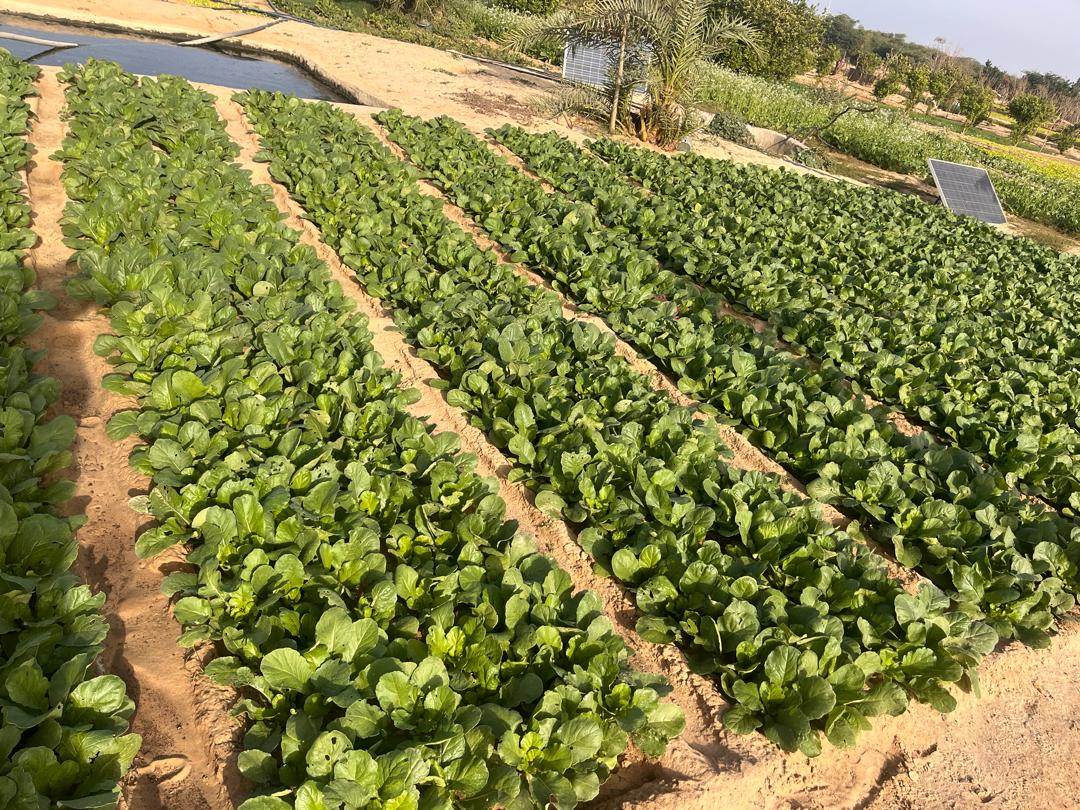
Unauthorized farmers are market gardeners who cultivate land without formal tenure rights and do not benefit from cooperative membership, subsidies, or institutional support. Unlike supported farmers, they must purchase all agricultural inputs at market prices, which increases their production costs. Irrigation is mainly carried out manually, with limited access to water storage facilities and modern irrigation infrastructure. These farms rely on both family labour and hired seasonal workers to carry out agricultural activities.
Their main cash crops are turnips and onions, which are marketed through various individual sales channels, including local markets and direct sales. Under the baseline scenario, turnip yields reach 7 t/ha, while onion yields average 10 t/ha. Farm income is estimated at 16,950.89 MRU, with annual irrigation water consumption of approximately 38,366 m³/ha. Despite achieving higher onion yields and farm income than supported farmers, these farms face significant challenges related to insecure land tenure, high input costs, limited institutional support, and inefficient water management.
Farms in PK-17 are generally smaller than 1 ha. The local sandy soils have low organic matter. The reported visual soil quality score is 3, and the water quality score is 3 (on a scale from 1 = good to 5 = bad).
Unauthorized farms predominantly irrigate plots manually. Water storage is limited, although the scenario tables indicate that some farms have storage; no storage volume is provided. Their water infrastructure quality score is 2 (on a scale from 1 = good to 3 = poor), while access to infrastructure is rated 1 (very low).
Unauthorized farms lack formal land rights and cooperative membership and do not receive subsidies or institutional support. Knowledge and innovation participation is rated 3 (moderate). Family labour amounts to 255 days/ha in the baseline and remains unchanged in both assessed scenarios, supplemented by seasonal hired labour.
Information regarding the proportion of production used for household consumption, livestock ownership, and income from off-farm activities is not available in the study.
The database will be available soon.
Simulation of agroecological practices and their combinations
The agroecological transition scenarios were co-designed together with the living labs through workshops that anchored the discussion in the challenges present in their territory. Consequently, they decided which agroecological practices, and which combinations of them, to promote the change in their farming systems. The AEP selection and scenario design comprised two different workshops focusing on the selection of agroecological practices aligned with the local context. First, a farmers’ workshop was conducted to design and select the agroecological practices they were willing to implement in the living lab, grounding the discussion on existing challenges. Subsequently, a representative board’s workshop was conducted, where representative board members examined the selected agroecological practices chosen by farmers, assessed their combinations, and identified additional practices.
| Name |
Crop diversification |
|---|---|
| Summary |
The crop diversification scenario involves reallocating part of the agricultural area initially dedicated to turnips and onions to the cultivation of additional crops, including garlic, groundnuts, and beans. This practice aims to increase crop diversity, reduce dependence on a limited number of crops, and improve the resilience of farming systems. By introducing new crops, farmers can also diversify their production and income sources, while creating additional marketing opportunities in local markets. This scenario is based on a static ex-ante assessment that compares the current farming situation with a potential diversified production system. It does not involve crop rotation or field experiments, but rather evaluates the expected effects of introducing additional crops within the existing farming systems. |
| Assumptions |
The scenario assumes that farmers diversify their production by introducing garlic, groundnuts, and beans while maintaining turnips and onions as their main crops. The additional crops are cultivated simultaneously within the existing farming systems rather than through a temporal crop rotation. It is assumed that part of the agricultural area initially allocated to turnips and onions is redistributed among the newly introduced crops. The yields of turnips and onions are assumed to remain unchanged compared with the baseline situation, as their cultivation practices are not modified. Irrigation methods and frequency are also assumed to remain constant, with farmers continuing to irrigate their plots for approximately two hours per day. Finally, the scenario assumes that the additional crops can be integrated into existing farming systems and marketed through available sales channels. |
| Technical details |
Baseline and scenario turnip yield is 7 t/ha for both types. Onion yield remains 6.5 t/ha for Supported farms and 10 t/ha for Unauthorized farms. For newly introduced crops, simulated yields are: groundnut 2.06 t/ha (Supported farms) and 2.13 t/ha (Unauthorized farms); beans 0.8 and 1.2 t/ha; garlic 9 and 9.5 t/ha, respectively. Crop diversity changes from 6 to 9 for Supported farms and from 2 to 9 for Unauthorized farms. Farms continue to irrigate approximately two hours daily using their baseline methods (manual plot watering, with some drip irrigation on Supported farms). The assessment is based on a static ex-ante comparison and does not consider multi-year dynamics or long-term changes in agricultural practices. |
Indicators
Agronomic
| Supported farms | Unauthorized farms | |||
|---|---|---|---|---|
| Scenario | Baseline | Crop diversification | Baseline | Crop diversification |
| Crop Diversity (# of crops) | Supported farms — Baseline6 | Supported farms — Crop diversification9 | Unauthorized farms — Baseline2 | Unauthorized farms — Crop diversification9 |
| Land Use | Supported farms — BaselineTurnip/onion-dominated | Supported farms — Crop diversificationSome turnip/onion area reallocated to garlic, groundnut and beans | Unauthorized farms — BaselineTurnip/onion-dominated | Unauthorized farms — Crop diversificationSome turnip/onion area reallocated to garlic, groundnut and beans |
| Fertilizer Use – Manure application (kg/year/farm) | Supported farms — Baseline28.125 | Supported farms — Crop diversification30.9375 | Unauthorized farms — Baseline26.925 | Unauthorized farms — Crop diversification29.6175 |
| Total Irrigation Water Used (m³/ha/year) | Supported farms — Baseline33,231 | Supported farms — Crop diversification36,554 | Unauthorized farms — Baseline38,366 | Unauthorized farms — Crop diversification42,202 |
| Water Productivity — Turnip (kg/m³) | Supported farms — Baseline0.649 | Supported farms — Crop diversification0.727 | Unauthorized farms — Baseline0.791 | Unauthorized farms — Crop diversification0.886 |
| Water Productivity — Onion (kg/m³) | Supported farms — Baseline0.603 | Supported farms — Crop diversification0.676 | Unauthorized farms — Baseline1.13 | Unauthorized farms — Crop diversification1.266 |
Socio-economic
| Supported farms | Unauthorized farms | |||
|---|---|---|---|---|
| Scenario | Baseline | Crop diversification | Baseline | Crop diversification |
| Total Farm Income (MRU; period not specified) | Supported farms — Baseline14,608.13 | Supported farms — Crop diversification25,452 | Unauthorized farms — Baseline16,950.89 | Unauthorized farms — Crop diversification29,329 |
| Labour — Total (days/ha) | Supported farms — Baseline255 | Supported farms — Crop diversification280.5 | Unauthorized farms — Baseline281 | Unauthorized farms — Crop diversification314.925 |
| Hired Labour Share (%) | Supported farms — Baseline0% | Supported farms — Crop diversification10% | Unauthorized farms — BaselineApproximately 10% | Unauthorized farms — Crop diversification24% |
| Name |
Composting |
|---|---|
| Summary |
The composting scenario introduces compost made from chicken and goat manure to partially replace the fresh manure applied to agricultural plots. The practice is assessed for both Supported farms and Unauthorized farms and aims to improve soil fertility, nutrient recycling and water retention, while reducing reliance on fresh manure. It increases in crop yields, water productivity and farm income, accompanied by greater labour requirements. |
| Assumptions |
The scenario assumes that 30% of the fresh manure normally used is replaced by compost produced from chicken and goat manure. The substitution is applied to both Supported farms and Unauthorized farms at farm/plot scale, while their structural characteristics (land tenure, cooperative membership, support, infrastructure and family labour availability) remain unchanged. The ex-ante assessment assumes that compost improves nutrient availability and soil properties sufficiently to generate an approximately 15% increase in turnip and onion yields. Irrigation methods and frequency remain the same as under the baseline (approximately two hours daily), and total irrigation water use is held constant. |
| Technical details |
The baseline and composting situations are compared statically; the results are simulated, not field-measured. Turnip yields change from 7 to 8.05 t/ha on both types of farms. Onion yields change from 6.5 to 7.475 t/ha for Supported farms and from 10 to 11.5 t/ha for Unauthorized farms. The modelled fresh-manure application falls from 28.125 to 21.09375 kg/ha for Supported farms and from 26.925 to 20.19375 kg/ha for Unauthorized farms. Irrigation remains approximately two hours daily, with manual plot watering and some drip irrigation on Supported farms, and predominantly manual watering on Unauthorized farms. Total water use remains at 33,231 m³/ha/year and 38,366 m³/ha/year, respectively. Family labour stays at 255 days/ha for both farm types, while additional hired labour is needed for compost preparation and application. |
Indicators
Agronomic
| Supported farms | Unauthorized farms | |||
|---|---|---|---|---|
| Scenario | Baseline | Composting | Baseline | Composting |
| Crop Diversity (# of crops) | Supported farms — Baseline6 | Supported farms — Composting6 | Unauthorized farms — Baseline2 | Unauthorized farms — Composting2 |
| Land Use | Supported farms — BaselineTurnip/onion-dominated | Supported farms — CompostingNo change in cropped area allocation modelled; turnip/onion-dominated | Unauthorized farms — BaselineTurnip/onion-dominated | Unauthorized farms — CompostingNo change in cropped area allocation modelled; turnip/onion-dominated |
| Fertilizer Use – Manure application (kg/year/farm) | Supported farms — Baseline28.125 | Supported farms — Composting21.09375 | Unauthorized farms — Baseline26.925 | Unauthorized farms — Composting20.19375 |
| Total Irrigation Water Used (m³/ha/year) | Supported farms — Baseline33,231 | Supported farms — Composting33,231 | Unauthorized farms — Baseline38,366 | Unauthorized farms — Composting38,366 |
| Water Productivity — Turnip (kg/m³) | Supported farms — Baseline0.649 | Supported farms — Composting0.746 | Unauthorized farms — Baseline0.791 | Unauthorized farms — Composting0.909 |
| Water Productivity — Onion (kg/m³) | Supported farms — Baseline0.603 | Supported farms — Composting0.694 | Unauthorized farms — Baseline1.13 | Unauthorized farms — Composting1.299 |
| Turnip Yield (t/ha) | Supported farms — Baseline7 | Supported farms — Composting8.05 | Unauthorized farms — Baseline7 | Unauthorized farms — Composting8.05 |
| Onion Yield (t/ha) | Supported farms — Baseline6.5 | Supported farms — Composting7.475 | Unauthorized farms — Baseline10 | Unauthorized farms — Composting11.5 |
Socio-economic
| Supported farms | Unauthorized farms | |||
|---|---|---|---|---|
| Scenario | Baseline | Composting | Baseline | Composting |
| Total Farm Income (MRU; period not specified) | Supported farms — Baseline14,608.13 | Supported farms — Composting16,838 | Unauthorized farms — Baseline16,950.89 | Unauthorized farms — Composting19,454 |
| Labour — Total (days/ha) | Supported farms — Baseline255 | Supported farms — Composting275 | Unauthorized farms — Baseline281 | Unauthorized farms — Composting321 |
| Hired Labour Share (%) | Supported farms — Baseline0% | Supported farms — Composting8% | Unauthorized farms — BaselineApproximately 10% | Unauthorized farms — Composting26% |
Agroecological zones
Agroecological zones (GAEZ v4) and Key Biodiversity Areas of Mauritania
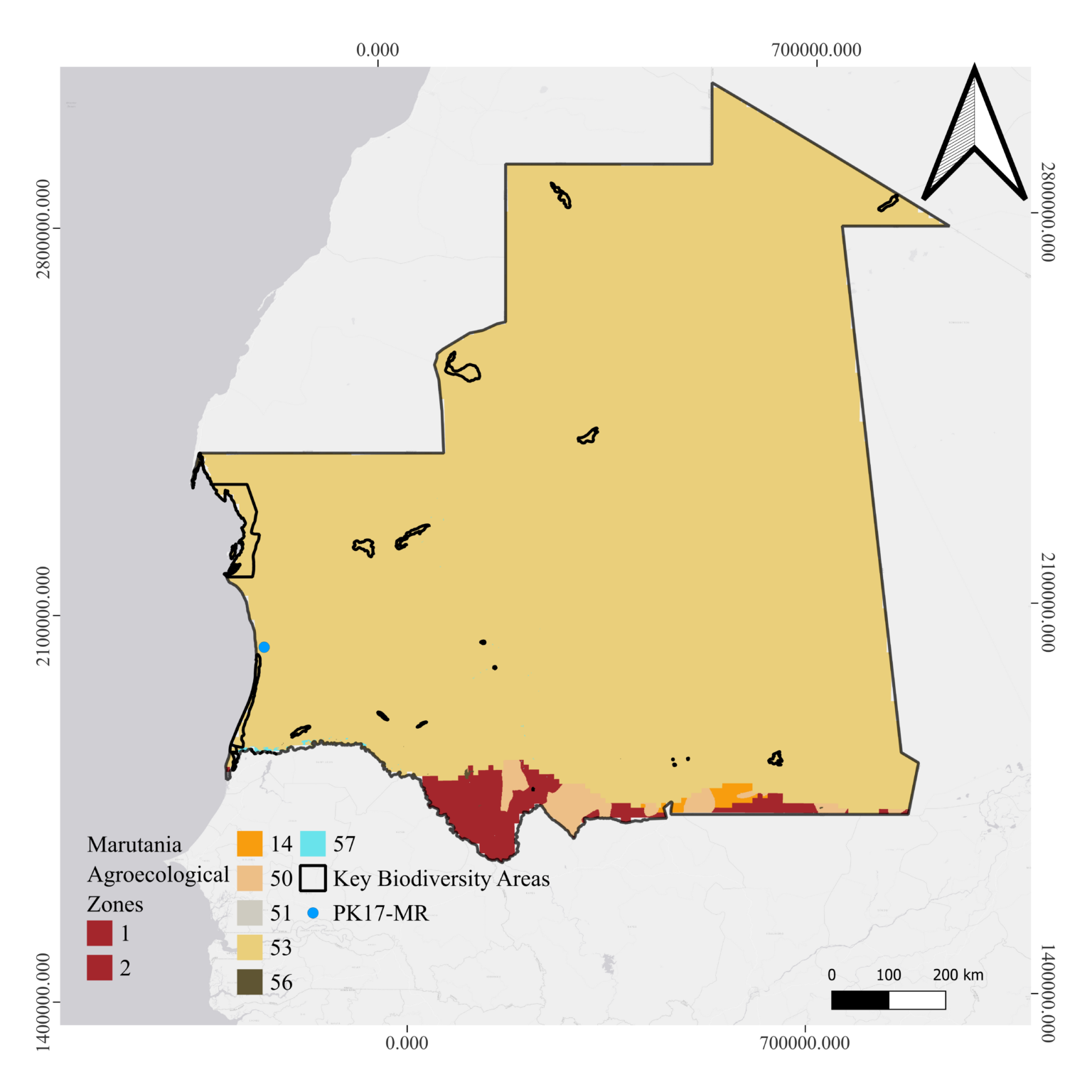
Legend
| AEZ | Temperature regime | Moisture | Soil/terrain limitations |
|---|---|---|---|
| 1 | Lowland | Semi-arid | Minor limitations |
| 2 | Lowland | Semi-arid | Significant limitations |
| 13 | Warm | Semi-arid | Minor limitations |
| 14 | Warm | Semi-arid | Significant limitations |
| 16 | Warm | Sub-humid | Significant limitations |
| 19 | Moderately cool | Semi-arid | Minor limitations |
| 20 | Moderately cool | Semi-arid | Significant limitations |
| 21 | Moderately cool | Sub-humid | Minor limitations |
| 22 | Moderately cool | Sub-humid | Significant limitations |
| 25 | Cool | Semi-arid | Minor limitations |
| 26 | Cool | Semi-arid | Significant limitations |
| 27 | Cool | Sub-humid | Minor limitations |
| 28 | Cool | Sub-humid | Significant limitations |
| 49 | Very steep terrain | ||
| 50 | Severe soil/terrain limitations | ||
| 51 | Land with ample irrigated soils | ||
| 52 | Dominantly hydromorphic soils | ||
| 53 | Desert/Arid climate | ||
| 56 | Dominantly urban/built up land | ||
| 57 | Dominantly water | ||
- Key Biodiversity Areas
- Riyad Living Lab (PK-17)
Agro-ecological zoning takes into consideration three parameters: the temperature regime, the available moisture in the environment and the restrictions imposed by the soil and/or topography. The temperature regime is a classification based on the prevailing temperatures, with some consideration on the average rainfall, and the temperature growing days (when daily temperatures are conducive to crop growth). Moisture classification is based on the availability of moisture for crop growth and is derived by the number of days where this growth is possible, considering both favourable temperatures and water availability. Soil/terrain restrictions are based on terrain steepness, as well as soil type.
The AEZ classification looks at those parameters without considering specific crops. Therefore, areas belonging to similar agroecological zones are expected to be equally suitable for any specific crop. As a result, any agro-ecological practices that are applied in a particular zone, should be able to be transferred in another area belonging to the same zone classification, using the same crop configuration.
Mauritanian climate is generally hot and dry and limited areas are suitable for irrigation. Climatically, the area near the southern border of Mauritania can support these agricultural crops, however irrigation would be necessary. This could only be possible near the Senegal river, on the south-west of the country. The PK17 is found in AEZ 53 (desert/arid), near the Atlantic coast. The influence of the ocean on the climate makes agricultural production possible under irrigated conditions.
Further results
The simulation and experimental results were discussed with local stakeholders during the participatory re-assessment workshop in the PK-17 LL. Overall, participants considered that the results of experimentation, bioeconomic modelling and Fuzzy Cognitive Mapping (FCM) were consistent with their field experience. The discussions highlighted several factors influencing the adoption of agroecological practices, particularly labour requirements, access to inputs, technical knowledge, economic costs and institutional support.
Compost and organic fertilisation
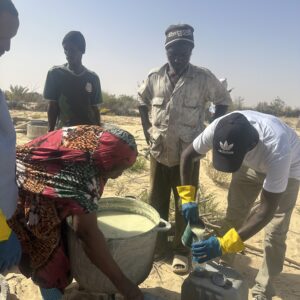
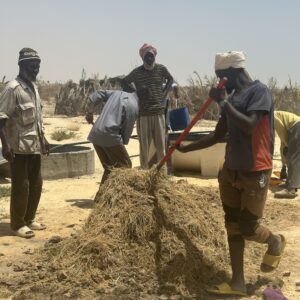
Participants agreed that compost could improve crop yields, product quality and soil fertility, particularly in the sandy soils of PK-17. Improved soil water retention was also identified as an important benefit for water management. Despite these advantages, compost production requires considerable labour and preparation time, ranging from one to three months. However, reduced dependence on chemical fertilisers could lower production costs and increase farmers’ income.
The main barriers identified were the need for continuous training and technical support, access to materials for producing organic fertilisers, and the availability of financial resources. Participants emphasised the importance of strengthening local cooperatives, supporting farmer leaders, promoting knowledge exchange and facilitating access to markets for agroecological products.
Crop associations
Participants considered that crop associations could contribute to reducing crop diseases and increasing yields. However, additional labour requirements were identified as a major constraint, as different crops require specific irrigation, fertilisation and management operations. High labour and transport costs could therefore limit the economic attractiveness of this practice.
Participants also highlighted the need for further experimentation to identify suitable crop combinations, particularly regarding their complementarity and their potential to reduce pests and diseases. Additional technical training, improved storage infrastructure and stronger market opportunities were considered necessary to facilitate adoption.
Key message
Across both practices, participants emphasised the importance of capacity building, farmer cooperation, knowledge sharing and improved access to local markets. Strengthening existing cooperatives and supporting collective initiatives were considered relatively feasible, while developing market demand and implementing agricultural subsidies were identified as more challenging.
Overall, the discussions highlighted that the wider adoption of agroecological practices depends not only on their agronomic and economic performance, but also on the availability of labour, technical assistance, financial incentives and supportive local institutions.